Technology
A technical overview of the Onyx analytical engine — how it works, what it produces, and where it fits alongside your existing tools.


The Analytical Approach
Statistical Models — Not a Neural Network
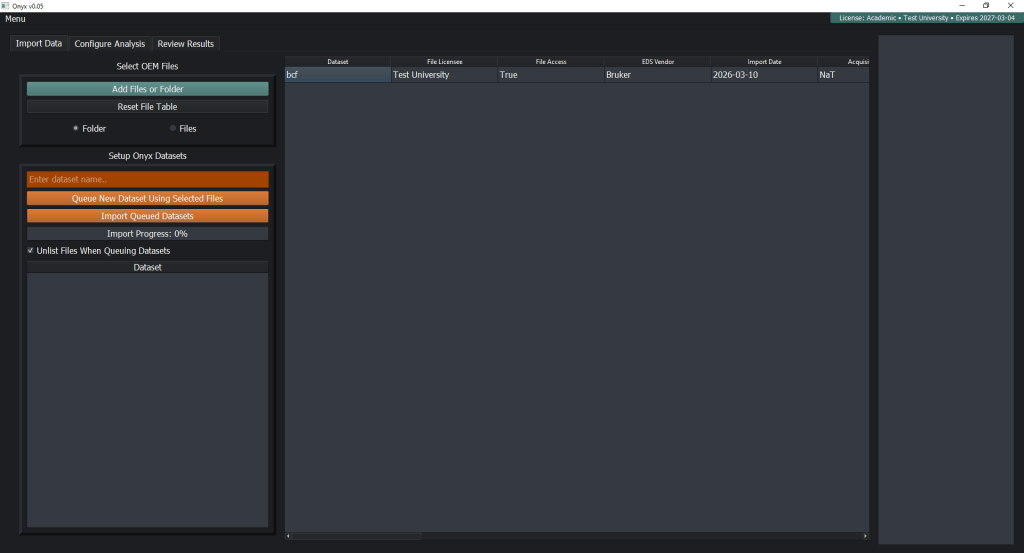
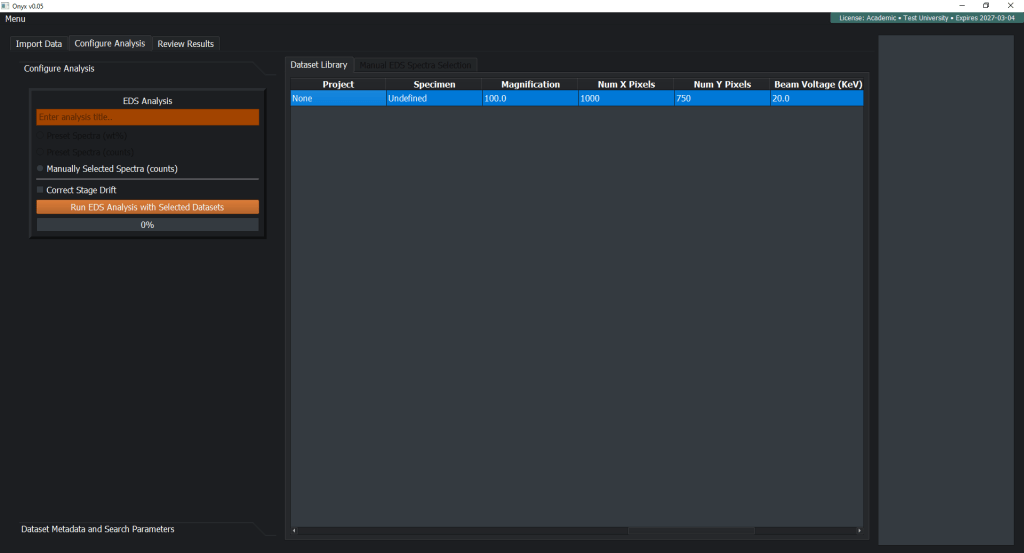
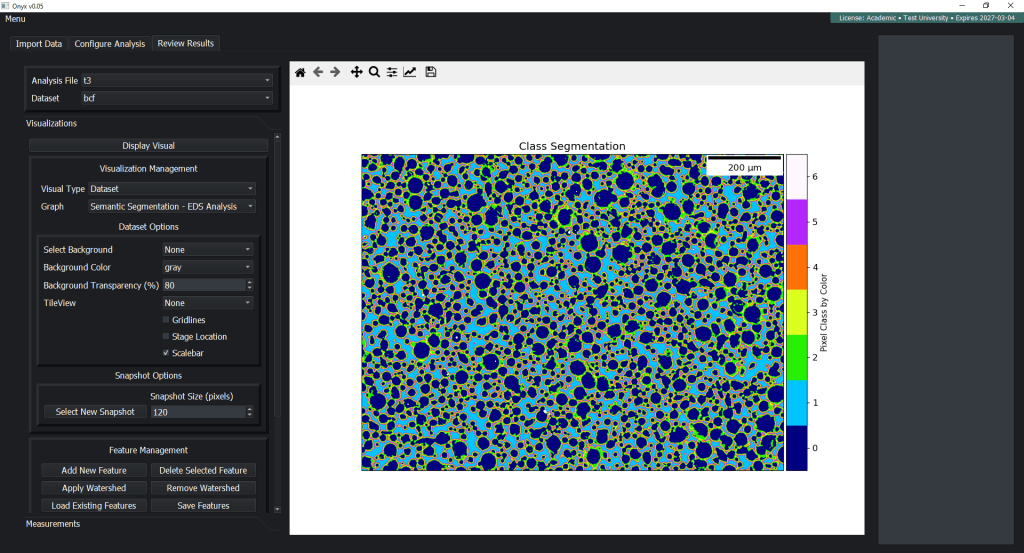
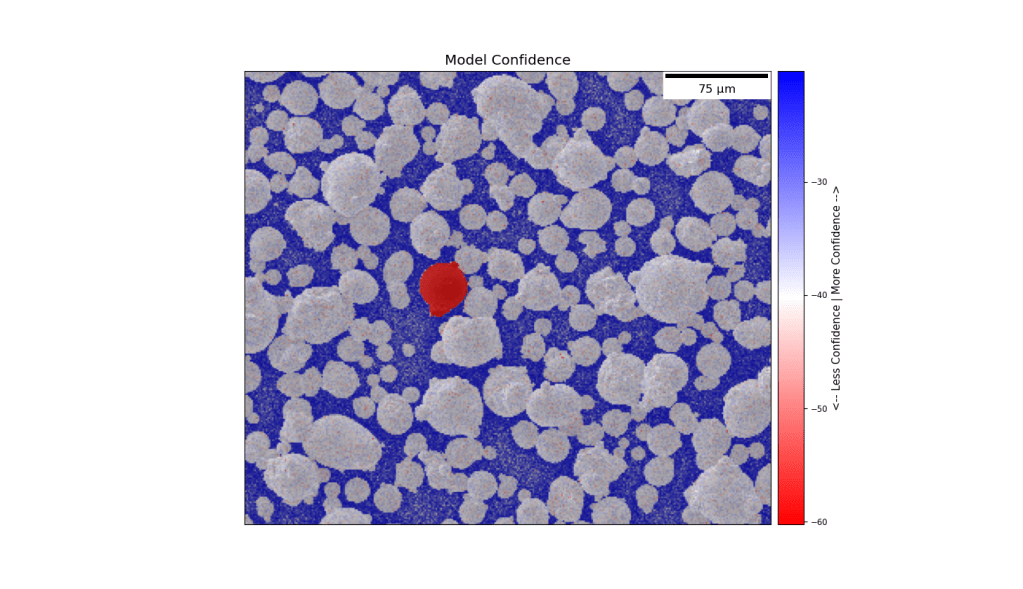
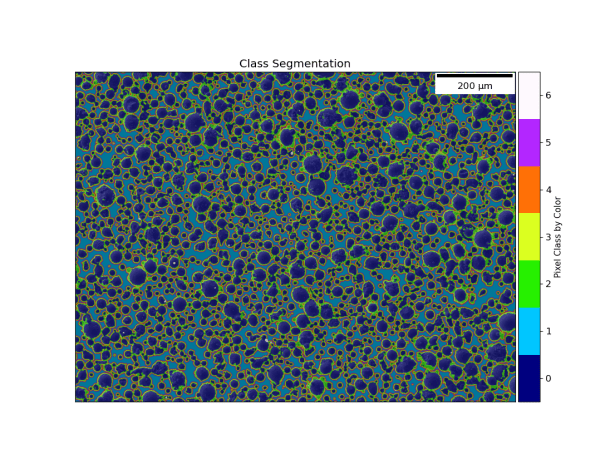
Onyx operates on the raw spectral data from each pixel in an EDS area map. The proprietary algorithm groups pixels into statistically distinct populations (Classes) based entirely on spectral similarity — not by comparison to a pre-built library, not by labels provided by a human, and not by a neural network trained on examples of “what a precipitate looks like.” This distinction matters. A CNN can only find what it has been trained to look for, requires a labeling step for every material system, and must be retrained whenever acquisition parameters change — accelerating voltage, magnification, working distance. For labs working across multiple alloys and instruments, this training debt often exceeds the cost of manual review itself. Onyx’s statistical approach eliminates it entirely. There is no labeling step, no per-system training, and no retraining. Because the model is statistical rather than supervised, it will identify every distinguishable phase in the dataset on the first encounter. This includes novel contaminants, unexpected intermetallics, and any phase not anticipated by the operator.
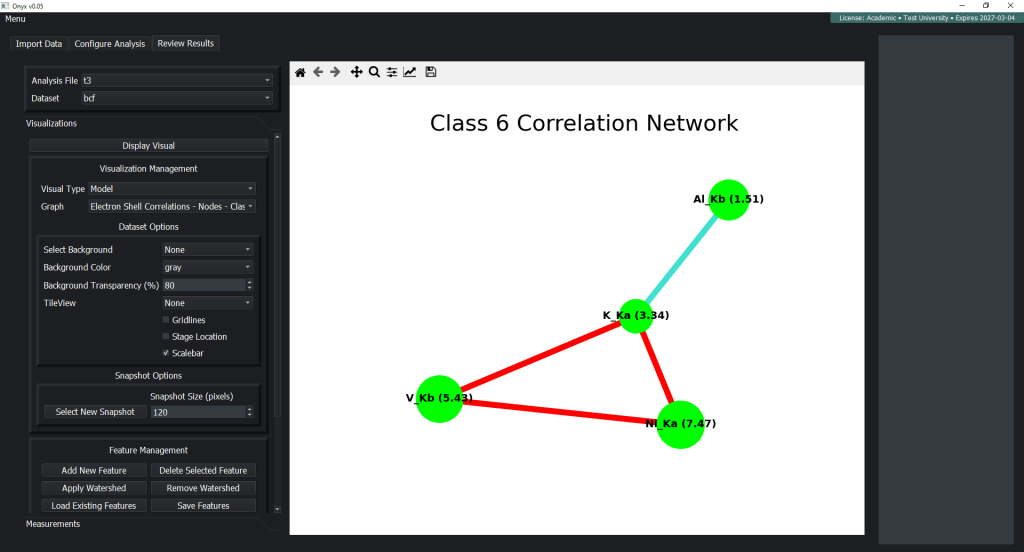
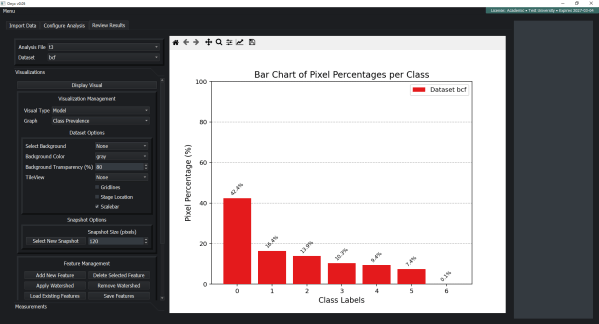
Onyx keeps the expert in the loop. Users inspect intermediate results and can act on beam interaction volume effects and topographic artifacts before quantifying phase area fractions, counts, and diameters. The model handles detection and measurement; interpretation stays with the domain expert.
The same engine runs on any alloy, any microscope, any dataset.
Outputs and Quantification
Scope and Limitations
Onyx will tell you that the pixels in Class A and Class B are spectrally different, but it does not assign metallurgical labels — it won’t call something a γ′ precipitate or an oxide inclusion. That determination requires domain expertise. Similarly, Onyx is not a replacement for the quantitative elemental analysis provided by your OEM software (AZtec, ESPRIT, APEX, etc.). Onyx identifies what is present and where; your OEM software tells you the precise stoichiometry. They are complementary tools.
Security & Data Architecture
Completely Offline Data Processing — Zero IP Risk
Open-Standard Output (HDF5)
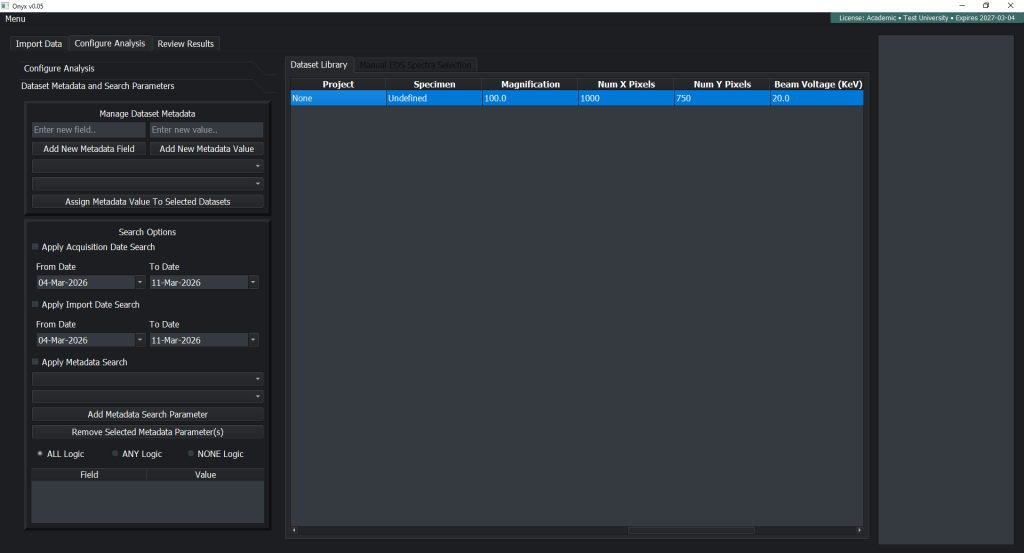
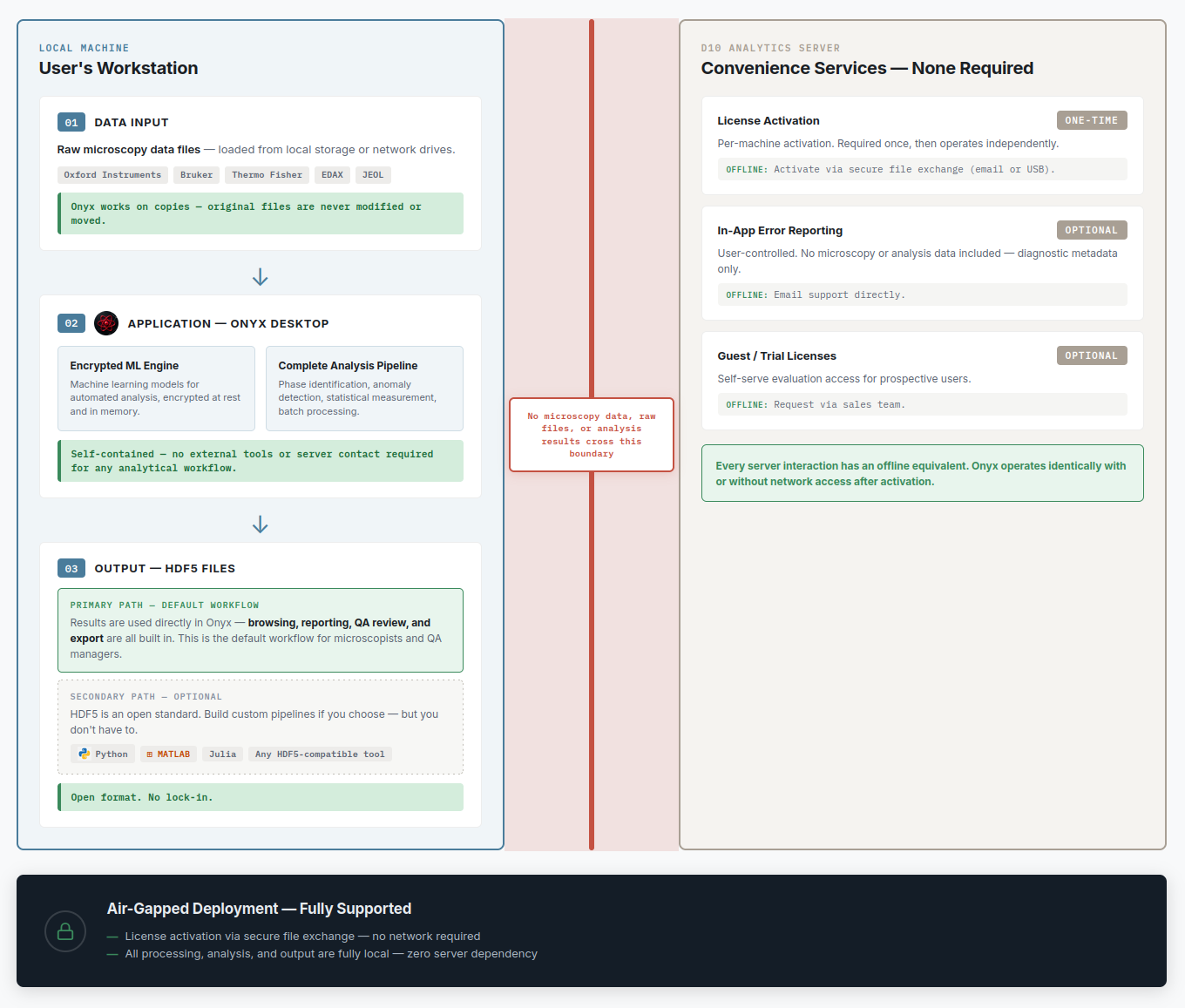
Onyx processes all microscopy data locally — your raw files, analysis results, and metadata never leave your machine. The only network activity is license verification and optional, user-controlled error reporting. No microscopy or analysis data is transmitted. For organizations where intellectual property security is non-negotiable — defense, aerospace, semiconductor, nuclear — this architecture eliminates cloud-related IP risk entirely. Air-gap deployments are supported by default. Onyx works exclusively on copies of your raw data; original files are never modified.
Every analysis result is stored in HDF5. No proprietary format lock-in. Read your results with Python, MATLAB, Julia, or any HDF5-compatible tool. The proprietary component is the ML engine (encrypted); the analysis it produces belongs to you.